01Steadier robots
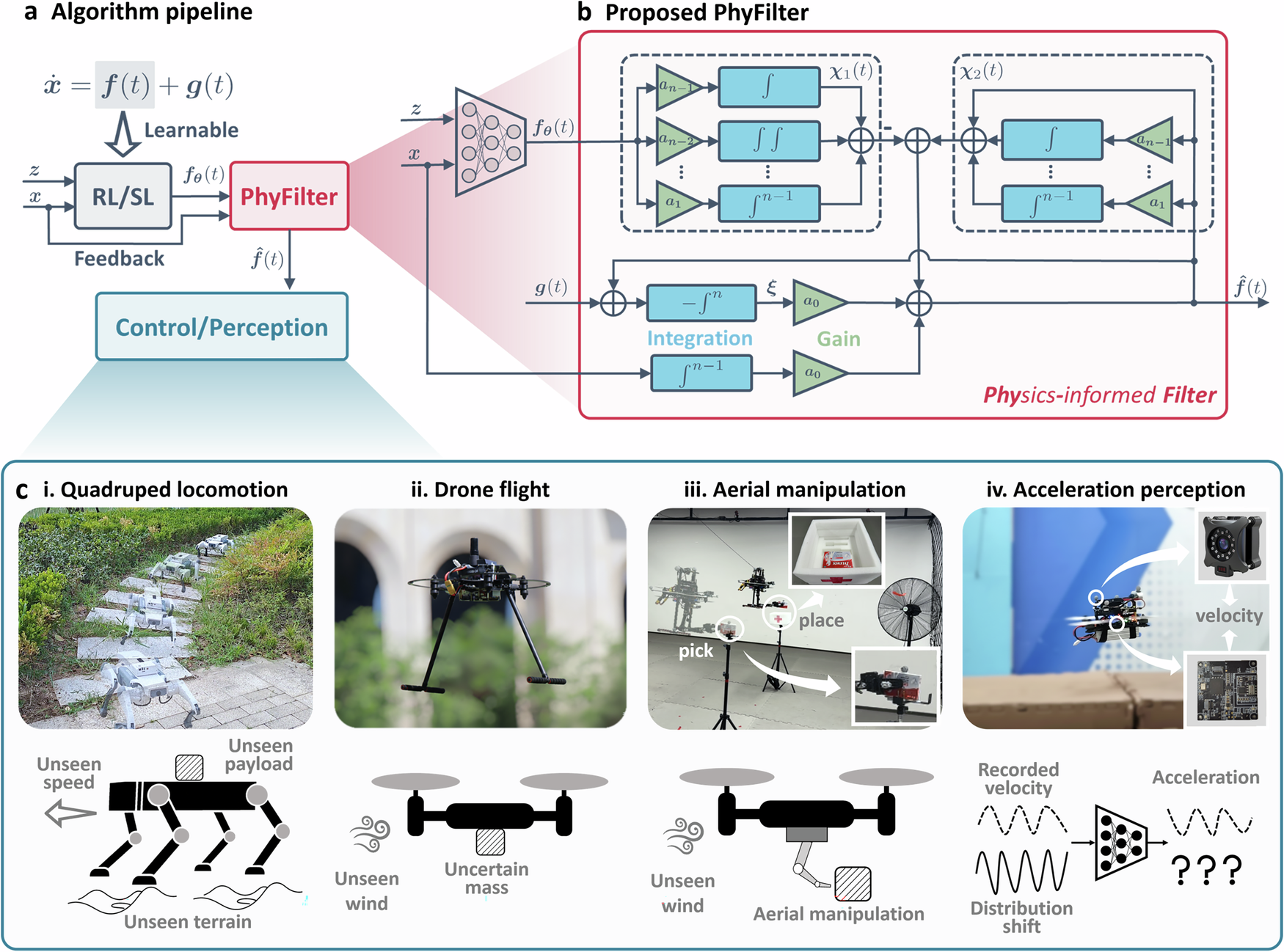
Researchers added a small physics check to a robot’s decisions before it moves. In their study, it helped four kinds of robot systems handle unfamiliar conditions without learning everything again. The method is called PhyFilter, and one version ran on a tiny computer chip.
Why it mattersA simple extra check could help robots cope better when the world differs from their training.
Keep in mind: The results come from the study’s authors, and the check needs a useful model of the robot’s movement.
Read the source · npj Robotics ↗02Robots in town
At least a dozen Coco delivery robots ended up together on a Chicago sidewalk after being sent along new routes at once. They stayed upright, but people had trouble getting past. The incident shows how a group can get stuck even when each robot can move.
Why it mattersUseful delivery robots need to share space comfortably with the people around them.
Read the source · CBS Chicago ↗03Robot kits
The Bimo project has shared software and walking examples for a small two-legged robot. Its planned kit costs $500, with refundable reservations available. If production goes ahead, it could give classrooms and small labs a more affordable way to explore walking robots.
Why it mattersLower prices could put hands-on robot learning within reach of more people.
Keep in mind: Shipping depends on certification and enough orders; design files and the assembly guide are still coming.
Read the source · Mekion ↗04A gentler touch
Researchers taught a robot to estimate when it is touching something by reading the effort in its joints. They showed it wiping a surface and opening a heavy door. It did this without the extra force sensors often used for delicate contact.
Why it mattersExisting robots might gain a better sense of touch without needing costly new parts.
Keep in mind: Public code and successful tests on other robot designs have not yet been confirmed.
Read the source · FWBC-VLA ↗05Learning at home
The XR-2 team has shared what it describes as 1,500 hours of household demonstrations using two robot hands. The collection includes camera views and descriptions of the tasks. Other researchers can use these examples to study how robots learn practical jobs.
Why it mattersSharing more examples gives teams a stronger starting point for teaching everyday skills.
Keep in mind: The hours come from different kinds of recordings, so they are not all directly comparable.
Read the source · PrimeBot · XR-2 ↗06Learning what works
A study found that software which looked good at predicting a robot’s movements could still be a poor choice for guiding it. In 18 of 24 conditions, a prediction test picked the wrong option once fresh sensor information was involved. Testing the whole task gave a different picture.
Why it mattersBetter tests can help researchers choose software that works well while a robot is actually responding to its surroundings.
Keep in mind: The work used a simulated wheeled robot, so physical testing is still needed.
Read the source · Georgia Tech · Emory ↗07Steadier robots
Stopping a moving robot is trickier than pressing pause on a video. A research system called Safe-Stop checks whether a walking robot can halt and regain its balance. The team reports computer simulations and 150 trials with a Unitree G1 robot.
Why it mattersA steadier stop could make walking robots easier to use around people.
Keep in mind: This is research, with much of the evidence from simulations; it is not a certified safety system.
Read the source · Berkeley · CMU · Stanford ↗